Models · Data · Compute

AI engineering for games.
Shaped around your task.

Choose the stage your team needs help with, or connect several into one project. The inputs, environment, and deliverables define the work.

Service areas

Six ways we support your project.

6 service areas

models / 01

Model training & adaptation

Define the intended inputs, outputs, and environment. Prepare evaluation samples, configure training, and adapt a selected foundation model around the task.

Deliverables may include
Model files, training configurations, and experiment records.
Discuss this task ↗
models / 02

Inference deployment

Package the trained model for a specified environment or connect it through a callable interface in an internal tool.

Deliverables may include
Inference programs, interfaces, environment requirements, and deployment notes.
Discuss this task ↗
data / 03

Data preparation

Organize images, video, 3D resources, and scene files. Convert formats and preserve their relationships to sources, parameters, and versions.

Deliverables may include
Structured datasets, source mappings, processing scripts, and field documentation.
Discuss this task ↗
data / 04

Rendered dataset production

Set camera, lighting, material, and scene conditions. Generate multi-view images and the metadata required for the task.

Deliverables may include
Rendered samples, available depth/normal/mask outputs, camera parameters, and generation configurations.
Discuss this task ↗
compute / 05

Compute environment setup

Configure dependencies and execution requirements around your models, code, and available compute environment.

Deliverables may include
Configured environments, task definitions, execution instructions, and operating notes.
Discuss this task ↗
compute / 06

Recurring development workflows

Connect preparation, rendering, processing, training, inference, and output management. Establish how new assets and model versions enter the workflow.

Deliverables may include
Automation scripts, update tools, execution records, and maintenance documentation.
Discuss this task ↗
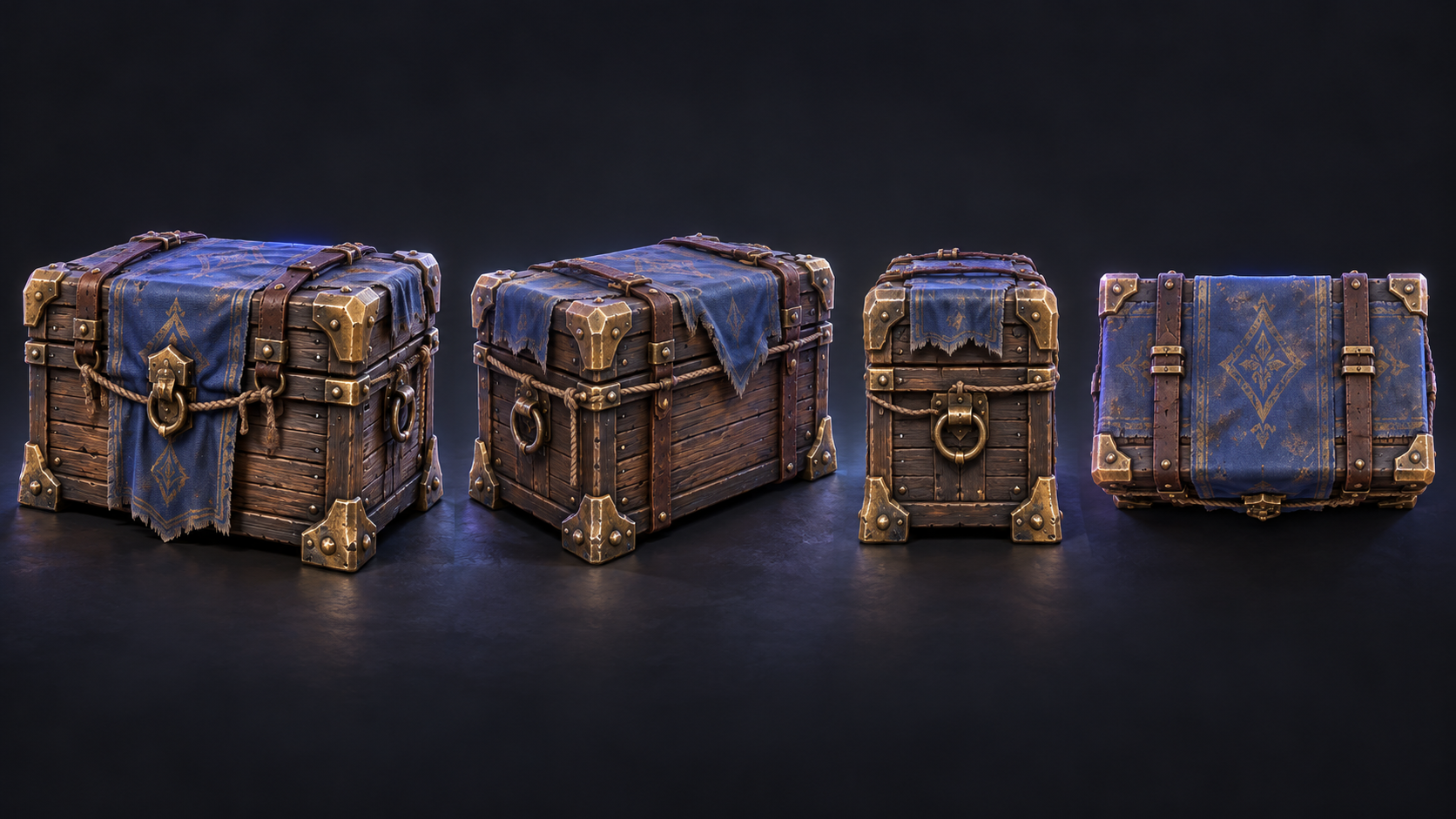
Four illustrative views of a fantasy game prop chest
AI-generated concept showing a game prop from four views.

Game assets become
structured training inputs.

For a studio asset library, scope can include camera views, background conditions, source identifiers, material metadata, and an update procedure for new content.

Scope & delivery

A clear input.
A useful output.

Every task begins with the objective, the materials available, and how the result will be used.

Project areaTypical inputsEngineering workPossible delivery
Model adaptationBase model, samples, target task, operating environmentData preparation, fine-tuning, evaluation, inference setupModel, configurations, experiment notes, deployment materials
Rendered datasets3D assets, materials, scene conditions, required data fieldsRendering setup, batch generation, mappings, output checksDataset, generation settings, processing tools, field documentation
Compute workflowsCode, dependencies, source locations, execution requirementsEnvironment setup, task execution, automation, updatesEnvironment, scripts, execution records, operating instructions
Asset retrieval exampleAsset library, identifiers, source paths, representative queriesMulti-view data, retrieval adaptation, indexing, interface deploymentIndex, model, callable interface, asset-update tools

The asset-retrieval row is illustrative. Exact outputs depend on the agreed project scope and source environment.

Compute foundation

Allocate compute
to the actual work.

Our available GPU resources include consumer and data-center hardware with interconnect capability. We plan execution around the memory, communication, graphics, and runtime needs of each task.

Training, rendered-data generation, and batch inference have different execution patterns. The workflow connects them while keeping their requirements explicit.

Discuss your compute needs ↗
Start a conversation

Tell us what you’re working on.

Tell us about your task, the assets or code you have, and the results your team needs.

Discuss your project

Write a brief, then open an email draft.