AI engineering for game development

AI engineering.
For the teams building games.

Model training, data production, and compute workflows—built around your game, your assets, and your development environment.

Focused technical tasks · Staged R&D · Ongoing engineering

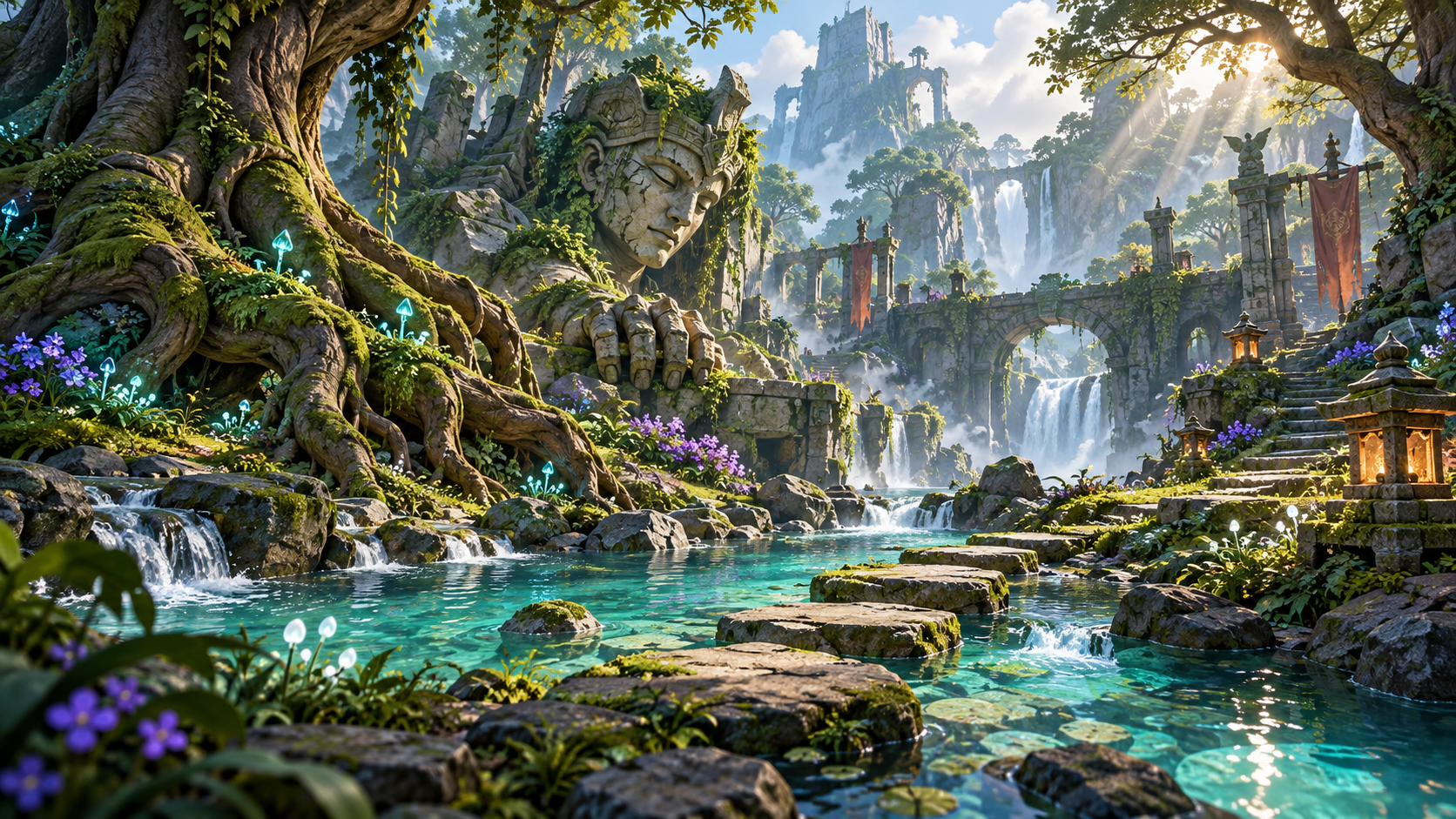
Illustrative fantasy game environment with stone architecture, timber buildings and atmospheric lighting
AI-generated game environment concept.
⌘ Model adaptation◈ Rendered data⇄ Compute workflows↗ Project integration
Our services

The engineering behind
your next AI workflow.

Running a model is one step. Preparing data, adapting it to a project, organizing experiments, and keeping it usable is the work that follows.

Service 01

Model training & adaptation

Connect a selected foundation model with your project data, technical environment, and intended outputs. We support the engineering from preparation through inference deployment.

  • Training data and evaluation samples
  • Environment setup and fine-tuning
  • Experiment execution and result evaluation
  • Inference programs and deployment
Typical outputs
Model files · Configurations · Experiment notes
Explore this service ↗
Service 02

Data & rendered datasets

Prepare images, video, 3D assets, and scenes for downstream model work. Controlled rendering connects visual samples with asset IDs, source files, and scene parameters.

  • Format conversion and batch processing
  • Multi-view asset rendering
  • Depth, normals, masks, and camera data
  • Dataset organization and repeatable generation
Typical outputs
Datasets · Field documentation · Processing tools
Explore this service ↗
Service 03

Compute & development workflows

Configure dependencies, organize GPU tasks, and connect data preparation, training, inference, and output management as projects and models evolve.

  • Compute environment configuration
  • Training and inference task execution
  • Automation, recovery, and output records
  • Deployment and update procedures
Typical outputs
Environments · Scripts · Operating documentation
Explore this service ↗
Connected by the task

Your assets.
Your code.
A clear delivery path.

NEW G works with game studios, game technology teams, and AI tool developers. We connect project data, model code, and GPU compute around a defined objective.

A project can cover one engineering stage or connect several—from the first data samples to a callable inference interface and an update workflow.

How we approach the work ↗
INPUTProject materials & requirementsDefine
DATAPreparation & controlled renderingPrepare
MODELTraining, adaptation & comparisonIterate
OUTPUTDeployment, tools & documentationDeliver
Built around game production

Your worlds. Your assets.
Your AI workflow.

From environment libraries and material references to internal artist tools, we connect AI engineering with the resources game teams already use.

Environment & prop libraries

Organize buildings, furniture, terrain pieces, and props into structured data. Keep every sample linked to its source in the project.

Artist-facing internal tools

Connect visual search, tagging, or batch processing to a studio’s existing toolchain through scripts and interfaces.

Ongoing asset updates

Update datasets and model versions as new content enters production, across fantasy, realistic, stylized, and science-fiction projects.

Different worlds. Connected engineering.

Built for games.
Across genres and styles.

Environments, props, and visual references can look very different. The work of preparing data, adapting models, and connecting tools still needs a clear production path.

AI-generated concepts showing different game-art styles.

Illustrative workflow · Asset retrieval

Find the asset.
Keep building the game.

A project example showing how rendered data, model adaptation, and compute engineering can work together.

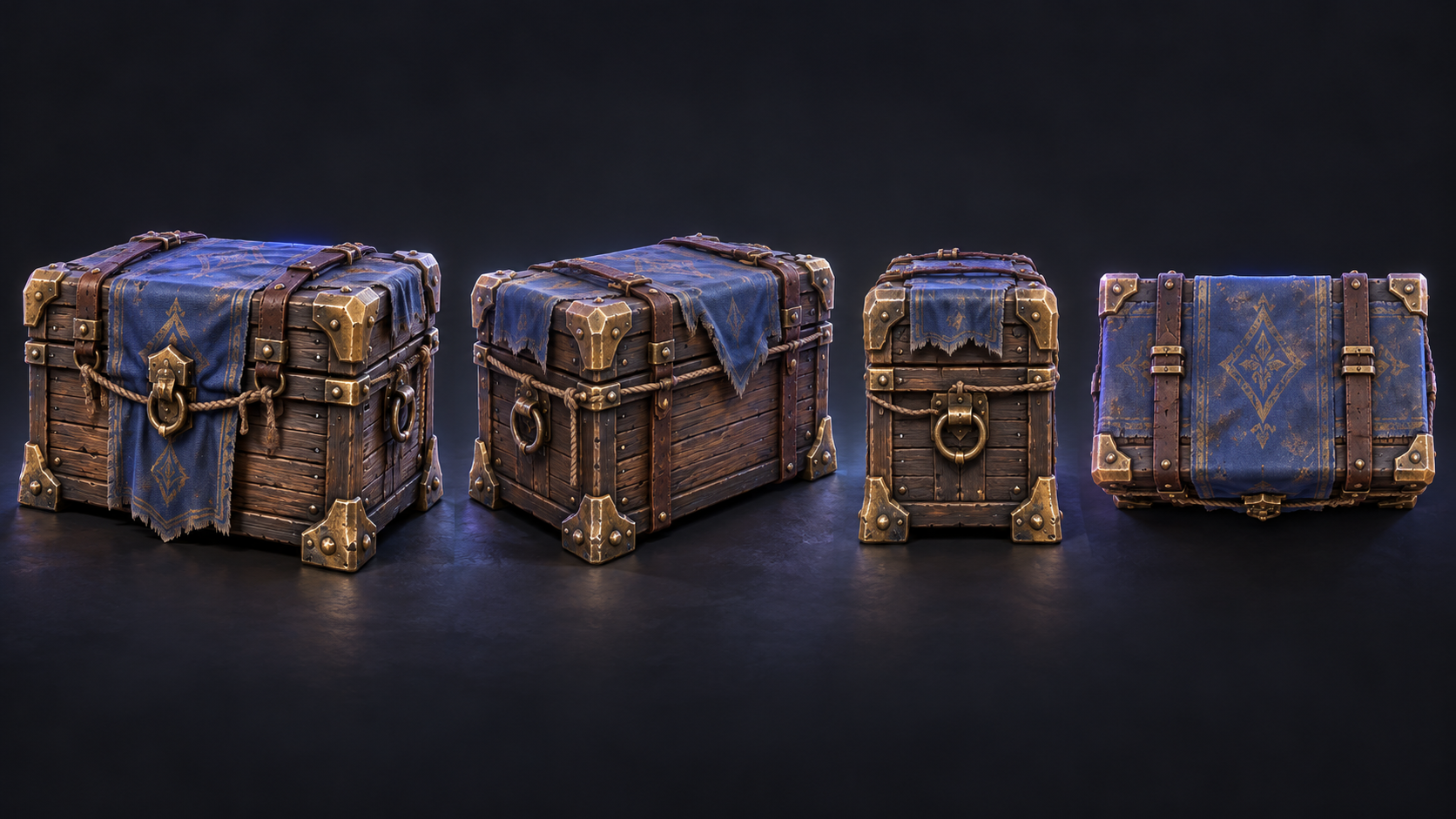
Four illustrative views of a fantasy game prop chest
AI-generated concept showing a game prop from four views.

A library full of possibilities.
A reference image to start from.

A studio has accumulated buildings, furniture, and props across projects. Directories are scattered, names vary, and several asset versions may exist.

The goal: let artists submit a reference image or scene screenshot and find visually similar assets, together with their identifiers and source paths.

Stage 01 / Data

Render the library.

Prepare models and materials. Render agreed views with consistent lighting and backgrounds. Associate every sample with its source asset and path.

Output: mapped multi-view data + generation settings
Stage 02 / Models

Adapt the retrieval model.

Build a baseline with a selected retrieval model. Compare shape, material, and viewpoint variations. Adjust data and fine-tune where appropriate.

Output: model + experiment records + comparison notes
Stage 03 / Compute

Connect the workflow.

Create a search index and callable interface. Return ranked asset IDs, similarity scores, and paths to the studio’s existing tool. Add an update path for new assets.

Output: index + interface + update tools + documentation
Reference image →Retrieval interface →Ranked asset IDs →Source file paths

Example workflow: from a reference image to matching assets and source paths.

One connected pipeline

From source assets
to deployed inference.

Rendering produces the data. Model engineering handles adaptation. Compute engineering connects execution, deployment, and updates.

01

Prepare assets & scenes

Organize source files, identifiers, and scene inputs.

02

Render controlled samples

Generate agreed views and associated scene information.

03

Process & organize data

Connect samples with their sources and task requirements.

04

Train or adapt the model

Run experiments around a defined objective.

05

Compare results

Review candidates, failure cases, and operating requirements.

06

Deploy inference

Connect the model and establish an update path.

Project deliverables

Built for the next stage
of your work.

Agree on what your team needs to receive. Delivery can include the following, according to the project scope.

01 / DATA

Structured inputs.

Processed datasets, rendered samples, source mappings, generation configurations, and field documentation.

02 / MODELS

Usable models.

Weights, checkpoints, training configurations, inference programs, and experiment notes.

03 / WORKFLOWS

Repeatable work.

Scripts, task definitions, execution records, update procedures, and recovery instructions.

04 / INTEGRATION

A clear handover.

Callable interfaces, deployment components, environment requirements, and operating documentation.

Start a conversation

Tell us what you’re working on.

Tell us about your task, the assets or code you have, and the results your team needs.

Discuss your project

Write a brief, then open an email draft.